08/29/13 9:30am

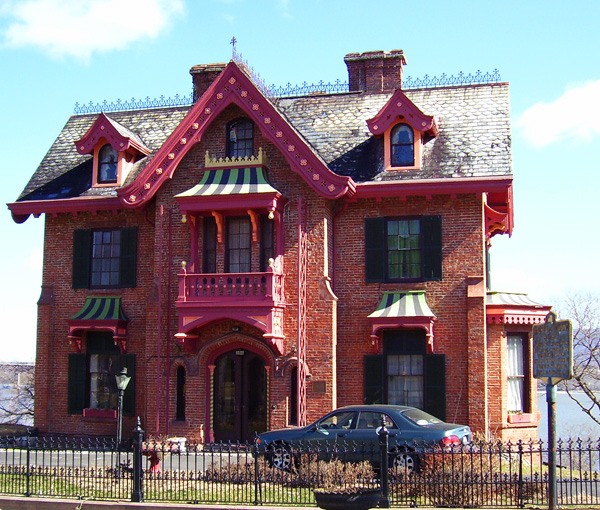
Warren_House,_Newburgh_NY

Have you been reading Newburgh Restoration but have yet to discover the City of Newburgh because you don’t know where to start? There is an opportunity for you to join a bus tour specially directed towards newcomers where you will learn about Newburgh’s history and meet residents. For people who want to visit from NYC,  the bus will pick up people at the Beacon train station. There will be other events going on in the City, so it will be a great time to see Newburgh. See below for details:

While a potential model for the small walkable city of the 21st century, Newburgh’s roots go back to 1609 when Henry Hudson spotted the verdant setting above the River. A bus tour is the ideal way to orient yourself to the city. Return later to visit Washington’s Headquarters, the Karpeles Museum, and the Crawford House. Tour includes buildings influenced by Andrew Jackson Downing and designed by Calvert Vaux, Frederick Clarke Withers, and A. J. Davis, as well as the Colonial Terraces Design District.

Escorted 90 minute bus tour & lecture of the architectural treasures in Newburgh’s Historic District will feature exclusive cameo presentations by local leaders, residents and experts on Newburgh’s history and architecture.

Sponsored by Newburgh for Newcomers. $15.00 Reservation necessary by September 12th. Register & pay online at http://n4n12550.com

04/23/13 10:30am

004[2]

With the mid-Spring warmth FINALLY trying to settle in, what better time than now to put on comfy sneakers or shoes and head on over to Bay View Terrace in the  Heights for a healthy and visually stunning power walk taking in the Bluffs and Newburgh’s special urban charms.

Start at the corner of Overlook Place and Bay View Terrace, tightly lace those shoes and head south. Take in the truly magnificent views and absolutely gorgeous vintage one of a kind Victorians and historic Row houses that line this broad and airy much loved street.

017

Many of the homes here are not only architectural gems but also represent some of the most aggressive revitalization efforts of “Newburgers with Vision”. They are not only “Rooms with a View” to the fabulous Hudson Vistas, but also “Rooms with a View” to  cultivating your own interest in Newburgh’s hopeful future!

010

Continue your power walk by taking a right turn onto Liberty Street. Following along Liberty Street you will see a myriad of well kept Rowhouses and refurbished Folk Victorians along with examples of aggressive efforts by Habitat for Humanity and invevitabley some “rescue me” homes that cry to be someone’s restoration project and may intrigue the “inner pioneer” in some of you.

035

Make a right turn onto Carson Ave which will follow along onto River View Place and back to Overlook Place and Bay View Terrace where you began. Now at that starting point TURN AROUND and head in the opposite direction to repeat a reverse journey. The view along Bay View Terrace heading north is equally incredible.  Plus it may allow you to notice different aspects of those absolutely beautiful homes along the way.

013

Remember to take bottled water as it is always important to hydrate. Don’t forget your cellphone or a digital camera to possibly capture a special view of the bluff to share with your friends on facebook. And maybe pay the message forward that Newburgh and the efforts of many are so worth investing in its future.

At the end of your power walk, reward yourself by heading on over to one of the fine Newburgh eateries for a fresh salad and a well earned moment to relax and enjoy your… “YOU TIME”!

04/23/13 9:00am

Quality Row Newburgh 1

On a small block on First Street in the City of Newburgh are a row of homes (112-120) that are kept in amazing condition known as Quality Row. They are really a showpiece for what other blocks in Newburgh have the potential to look like. Although the houses across the street don’t quite look like these, they are a breath of fresh air.

Quality Row Newburgh

These Federal style houses were designed in 1835 by Thornton Niven and built on land that had been the garden of Rev. John Brown. They are now national historic landmarks. The house at 116 First Street is known as the Clinton-Deyo House. It has a plaque that says that in 1836 Thomas Edison stayed there as a guest while establishing the Edison Illuminating Company. In 1883 it was Newburgh’s first private home to be wired for electricity. It was also wonderfully restored by Don Herron back in 1994. He unfortunately passed away this year.

Quality Row Newburgh

So where did the name Quality Row come from anyway? According to the 1891 publication Newburgh: Her Institutions, Industries and Leading Citizens, “At the time of their erection these house were considered much above the average in cost and elegance, and for this reason, combined with the high social standing of the original occupants, the buildings were known throughout the village as “Quality Row,” a designation which still lingers among our old families.” That designation still lingers today, over 100 years later!

Quality Row Newburgh1891

The homes still remain wonderfully intact.

Quality Row Newburgh 4

Other reading on Quality Row Newburgh:

Evening News-Letter to Editor 1982
Evening News-Artist Renovates Century Old House in a Unique Way 1989

04/02/13 10:31am

041

Thursday, March 28th noon I stood on the corner of Lander and South Street with the anticipation of an explorer in unfamiliar waters. Mother nature was having some interesting mood swings offering a brilliant blue sky one minute and then billowing clouds bringing hues of grey the next and then back to various blue shades of wonderful again.

I could not help but notice as I walked down this section of Lander Street just how quiet and serene it was on this “often singled out” NOBRO block and absolutely beautiful and quintessentially urban in its presence. This part of Lander Street has been the recipient  of extensive restoration and historic preservation. A number of the brick rowhouses and brownstone style buildings here have been wonderfully rehabbed and meticulously managed by PathStone of Newburgh in order to create The Lander Street Apartments. This “neighborhood building” project has been on-going for a number of years and PathStone is currently in the process of leasing “Phase Three”.

040

I spoke to a gentleman who was renting at one of the rehabbed buildings and he shared with me how happy he was with both the ongoing progress being made in working to make Lander Street safer and his appreciation for his generously sized and attractively appointed apartment. He also told me that he was drawn to Lander Street specifically because of the historic preservation there. He pointed out to me that the late 19th century buildings renovated as part of the PathStone project were easy to identify as they all shared the same style of prominent gold address numerals (in vintage block design) located on the transom window above each exterior entry door. What also makes this project interesting is that there are a few different historic building styles that were chosen for restoration along the way.

043

As our conversation ended and the man entered his building, I was totally alone again. Mind you, I did not feel alone in an abandoned way, but in a way when one is thoroughly aware of their place within the solitude and obvious quiet. I looked up and down the empty street, marveled at its time honored beauty and then whimsically thought to myself at that moment, if only Edward Hopper (the iconic American painter who was part of the Ashcan School) were alive and could see what I am seeing here in Newburgh. I imagined him capturing this solitude and starkness, the historic details and linear perspectives of Lander Street on canvas as he did with much of his work and in particular his urban masterpieces “Nighthawks” and “Early Sunday Morning” or his classic “Sunlight on Brownstones”.

042

For those that may not know this, Edward Hopper was no stranger to the Hudson Valley as he was born and raised in Nyack NY. Though famous worldwide, the majority of his works were depictions of urban landscapes and “urban slice of life moments” in and around New York City. With Mr. Hopper long gone, the truth is that we will never have any way of knowing  if he would have ever painted Lander Street or Liberty Street or any Newburgh Street for that matter. But, as I stood there that afternoon, I wanted to think that maybe, just maybe, he would have. So with that, as you view my photo images (squint as you stare at them, and think of Edward Hopper’s style), and see if we share a feeling that they respectfully capture a bit of his urban spirit while paying homage to his remarkable talent. Let’s also try to recapture a deep appreciation for this visual and visceral historic street in Newburgh.

03/19/13 10:30am

021There is such a variety of home styles that comprise the historic districts of Newburgh. Most of my previous posts have focused mainly on my personal favorite which is the historic rowhouse. But, for those Newburgh Restoration followers who love a vintage free-standing home comprised of sticks and stones (stick built and stone foundations), consider an American classic, the Folk Victorian.

The Folk Victorian was one of the most widely constructed housing styles sweeping the country during the period from 1870 to 1910. Referred to as the “Everyman House”,  it was born out of the simple box frame and  L shaped designs of the previous decades, when basic free-standing frame housing was built for purpose, (not style) and sported little to no embellishments to its facade.

092

The Folk Victorian movement took advantage of the country’s new industrialization and the creation of machinery, like the jigsaw and the craftsmen who had learned to master it. It gave them the ability to create gingerbread trim, carved spandrels and lovely ballisters either customized for a specific home or pre-manufactured in distant places and shipped via a growing railroad system. It now allowed the most simple free standing frame houses to be more distinct with lovely attractive trims and a Victorian style perfectly suited for a more simple lifestyle than it’s more grand and wealthy relative, the ornate Queen Ann Victorian.

025

Some distinctive features of a true Folk Victorian are front porch embellishments such as carved ballister and spindle railings,  and carved spindles along the porch’s horizontal roof line. There are also thick simply carved porch posts with decorative gingerbread detail in the corners and usually a single front gable creating a pyramid shaped roof line (at times sporting a touch of gingerbread detail also). Many Folk Victorians are covered with clapboard siding, though over the years may have been replaced with vinyl due to excessive wear and tear.

The Folk Victorians pictured in this post are clustered in the Heights neighborhood of Newburgh (but you can find many others through out the city). If you choose to walk past these lovingly kept homes on Overlook Pl, on Courtney and along Liberty Street, notice the details that make them fine examples of that Victorian style.

026

Check here on Newburgh Restoration for listings of wonderful Victorians (and historic rowhouses and period homes) that may currently be for sale and within affordable  reach. It’s your chance to buy a slice of true Americana and you’ll also be part of revitalizing a New York historic treasure, Newburgh, NY!