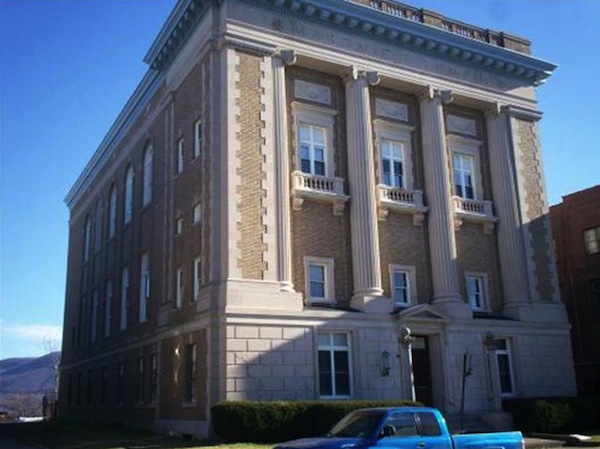
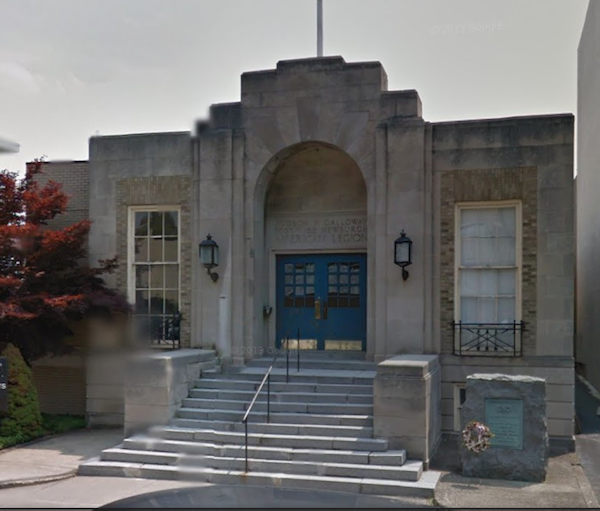
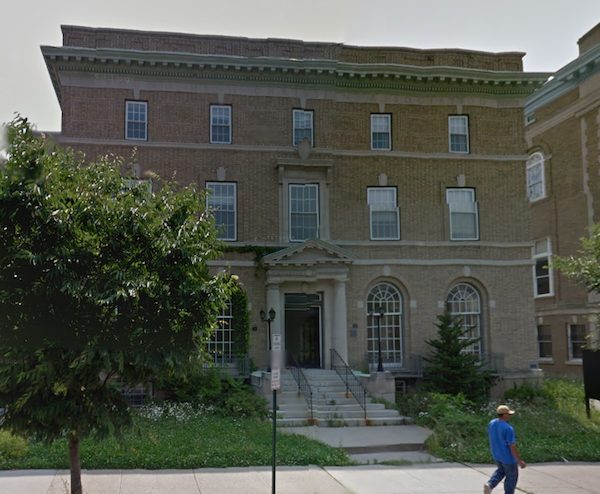
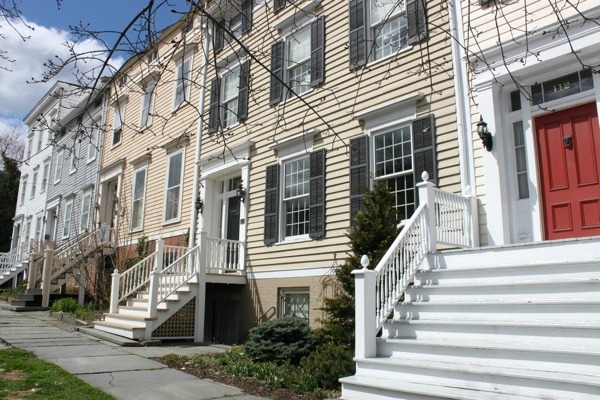
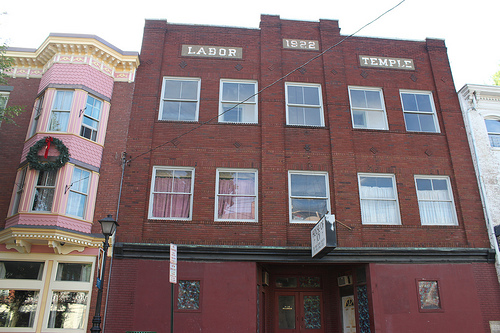
Orange County has bought 3 of the most handsome and stately buildings Grand Street has to offer. According to this Mid Hudson News article the buildings will be Orange County Community College. This will open up opportunities for the Start-Up NY campaign to get businesses starting in NY state with tax free incentives that last about 10 years. The agreement is that businesses will support a school’s academic mission or curriculum. Eight other colleges in NY have already been approved for this program. It will be interesting to see how this is implemented in the City of Newburgh.
Governor Andrew M. Cuomo announced last week that applications are now available for $50 million in federal funding for a variety of alternative transportation projects, including the construction of bicycle and pedestrian facilities in New York State.
Eligible project activities include:
On-road and off-road trail facilities for pedestrians, bicyclists and other non-motorized forms of transportation;
Infrastructure-related projects and systems that will provide safe routes for non-drivers, including children, older adults, and individuals with disabilities, to access daily needs;
Community improvement activities, including improving roadway safety in transportation rights-of-way and erosion control; and
Environmental mitigation activity, including pollution prevention and abatement activities and highway storm water drainage control to prevent flooding.
If Newburgh could get their hands on some of this money what ways do you think it could be spent to improve transportation in the city?
Today a Mid-Hudson News article revealed plans to launch a project to possibly make Newburgh a port city. If this were to happen, one of the ports primary functions would be to load off steel coming from the Tappan Zee Bridge remodel. Talk is even beginning to bring cruise liners into the port as well.
This could make Newburgh a destination and increase tourism. What do you all think about making Newburgh a deep sea port? Don’t forget Newburgh used to be a bustling ship building port during WWI.
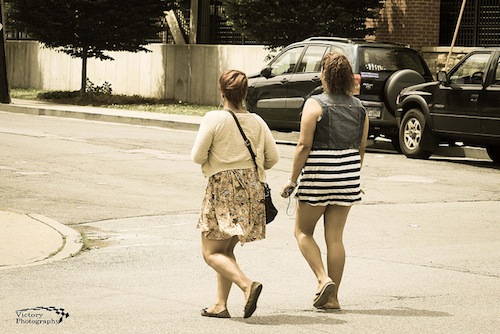
A new movement is starting. Have you noticed it? It really is not a new idea, but cities are becoming popular again; cities of all sizes. The exodus to the sprawling suburbs of post WWII America is shifting. Remember when the thought of Brooklyn conjured images of riots and the shore of the East River was littered with abandoned cars and containers? Things have certainly changed since those days. However, it is not just NYC that is seeing the change, it is cities across America as well. The American dream is now encompassing other preferences that include sustainable, compact housing in high density areas. The new preference is not just for mega-cities anymore. How do we know this and what does it mean for the City of Newburgh?
Four national surveys have all found trends for reduced preference for unattached, large-lot, single-family homes in an isolated suburb (Nelson 2012). A study by Meyers and Gearin found that by 2015, 17% of American households would like the option to live in a townhome. Another study by Nelson synthesized from other surveys found that 38% of Americans wanted the option to live in an attached home (apartment, townhouses, condominium and cooperatives), 37% wanted a single family home on a small lot, and least of all – only 25% wanted to live on large lots. These findings have repeated themselves in other surveys. Young Millenials and Baby Boomers want to live near city centers in neighborhoods that are walkable and near amenities. They also want smaller homes because they do not have large families and don’t want to spend their free time maintaining them. Seniors who are downsizing from their large homes and empty nesters will account for 19 million households (Nasser 2012).
A recent study by Case Western Reserve University found that Cleveland’s inner city is growing faster than its suburbs for the first time (Naseer 2012). The American Dream could be changing because we are living differently than Americans did 60-70 years ago. Allison Arieff (2012) quotes from an article saying, “sweeping demographic changes…are transforming the way Americans want to live.” Americans are waiting longer to get married, longer to have children and are living more transient lifestyles that simply do not support or warrant buying a large home (Hart Research Associates). Not everyone needs or wants a large house out in the suburbs. As Nelson (2012) says, “The days of planning communities substantially to meet the needs of households with children are over” (p. 15). Gregory Vilkin, president of a real estate investment company says that the shift is not temporary. “It is no longer the American dream to own a plot of land with a house on it and two cars in the driveway”(Naseer 2012).
The National Association of Realtors (NAR) found in their 2011 survey that 59% of Americans would choose a small house on a small lot if the commute to work were less than 20 minutes over a large house on a large lot if the commute is more than 40 minutes. Americans want to be able to bike or walk to work even if only a small percent actually do it. However, when work or errands are within a mile of home, more Americans will use a bike or walk to perform these duties (Nelson 2012). This shows that demand is shifting. People don’t mind living in smaller quarters if they can spend less time in the car commuting. This is very different from the idea of “driving till you qualify”. If people are given more options that can suit their lifestyle, they will utilize them.
If the American Dream is changing, metro regions of the future will see change also, including Newburgh. The dense grid network system of the City of Newburgh makes the community walkable and bikeable with the potential to have many amenities close by. With the second largest historic district in New York State, there are hundreds of buildings that fulfill the smaller living quarters so many are starting to view as desirable again. Not only that, but Newburgh also has a mix of larger homes with land for those who have a different preference as well. The city also has enough storefronts, upper floors, and warehouses to support local businesses that local residents can commute to.
The City of Newburgh has the ability to function as it did at the height of its day- a place where people can live and work. Communities that serve both of these functions usually have healthy economies and are are often quite expensive to live in. Residents have long been priced out of NYC boroughs. They are heading south and west, but many are heading up north to the Hudson Valley. It might not happen as quickly as we like, but it will only be a matter of time before people realize that they don’t have to create the mobile high-density environment they are seeking from scratch. We already have it here in the City of Newburgh.
References:
Arieff, A. (2012, June 18). The American Dream: Phase II. Opinionator The American http://opinionator.blogs.nytimes.com/2012/06/18/the-american-dream-phase-ii/?_r=0
Hart Research Associates. (2013, April 3). How Housing Matters: Americans’ Attitudes Transformed By The Housing Crisis & Changing Lifestyles. MacArthur Foundation. Retrieved December 14, 2013, from http://www.macfound.org/media/files/HHM_Hart_report_2013.pdf
Nasser, H. E. (2012, May 15). Subdivisions go urban as housing market changes. USATODAY.COM. Retrieved December 13, 2013, from http://usatoday30.usatoday.com/money/economy/housing/story/2012-05- 5/housing-fills-in-urban-areas/54979594/1
Nelson, A. C. (2012). The Mass Market for Suburban Low-Density Development Is Over. Urban Lawyer, 44(4), 811-826.
The City of Newburgh Department of Planning & Development is pleased to announce that funding for storefront/ façade improvements is available for owners of commercial and/or mixed use properties along Broadway. Successful applicants will receive a grant for 50% of the project costs up to $15,000. Properties that are entirely residential are NOT eligible for funding.
Scopes of work should be targeted toward storefront improvements, lighting, signage etc. Applicants are required to match public funds and must maintain ownership of the building and upkeep of the façade during a 7-year loan deferment period.
Preference will be given for improvements to consecutive buildings that meet the qualifications. Projects that are within the City of Newburgh’s Historic District will require approval from the Architectural Review Commission (ARC) before commencing.
The deadline for submitting applications for the program is February 13, 2014.
Applications may be picked up at the Planning & Development Office or downloaded from the City of Newburgh website at www.cityofnewburgh-ny.gov. To submit or request an application or to receive more information about this program, contact Courtney Kain, Director of Community Development, City of Newburgh, City Hall, 83 Broadway, Newburgh, N.Y. 12550 or call (845) 569-9400.
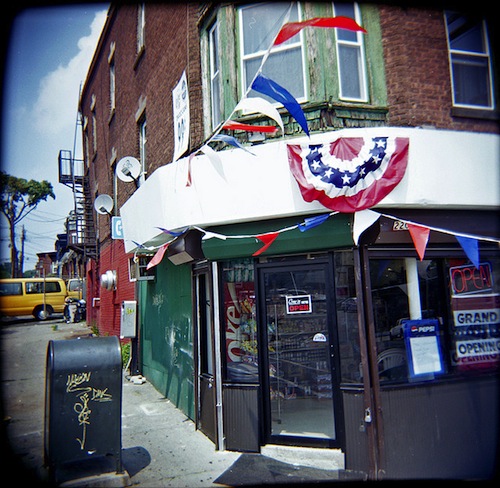
On December 11th, the Regional Economic Council (page 103) announced funds that will be given to a number of historic preservation and Main Street projects. Newburgh was one of them being awarded $20,000 to develop design guidelines for the Broadway corridor. What kind of guidelines would you like to see implemented on Broadway? How about getting ride of metal security gates, neon lights, and satellite dishes?